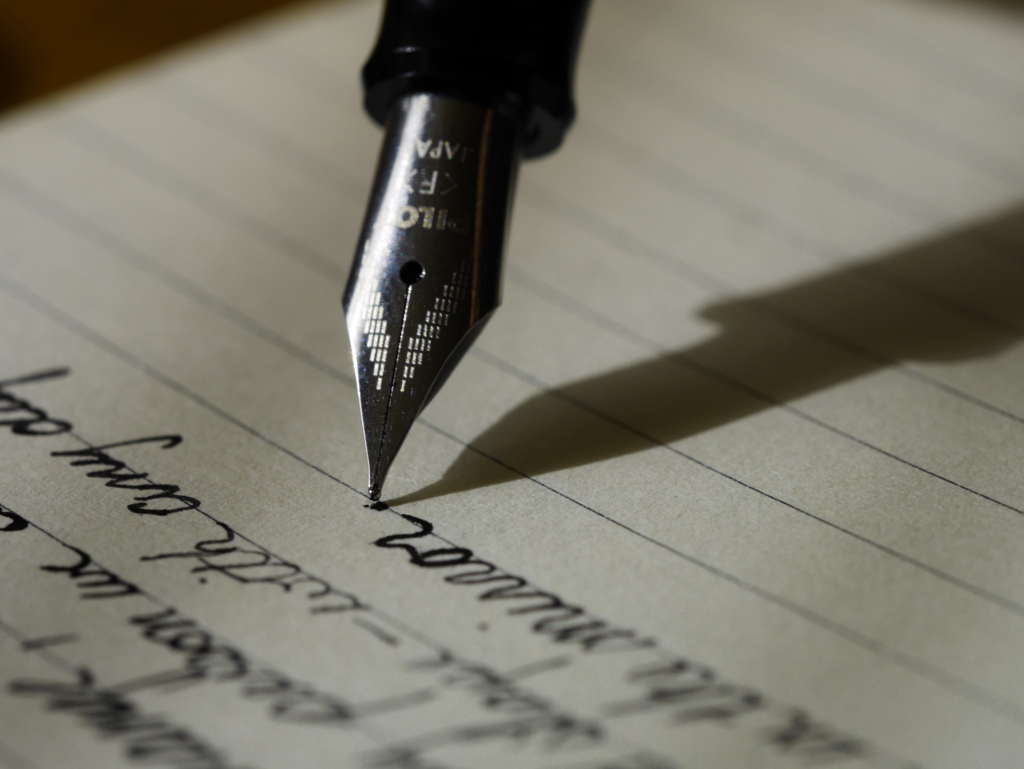
The Difficult Second Noveltm arrived back from the editor a few weeks ago. She’s done a good job. I accept almost all of her comments. Her questions have been, for the most part, helpful. Her observations have also been insightful. I only disagree with her perspective on one point, and that one point is minor and doesn’t affect the story. She also asked the same question in a few places in the manuscript, and that question has caused me to come up with a new naming convention for each chapter.
But she did ask one telling question about a story arc which made me sit back and think. I got her point straight away, but if I accepted her view I would have to erase that story arc from the book, and rewrite every scene where that story arc has an impact – and it’s a major structural plot device with a significant number of touchpoints. I was resistant, for all of these reasons, and not least because that story arc had sparked some above average dialogue.
I felt I was getting blocked by the dilemma, it’s a big thing to reconsider a pivotal plot device, so I put the manuscript away for a while. I thought about it a lot. I even worked up a file of everything that would have to change, and what would have to alter in characteristics.
Earlier this week I retrieved the manuscript and started reworking the whole book, removing that story arc and rewriting every touch point, then refining the characterisations and matching the dialogue. I’m still doing this, and also updating the overall timeline as I work through the new structure.
I guess a good editor aims to get the best out of the work they’re engaged on, but they don’t have the same bond with the piece that the author has, so they can make such anarchic suggestions as ‘get rid of one of these central pillars’?
As a reference to your picture, just imagine how much work would be involved in reworking TDSN, if you were using an old fashioned typewriter instead of a word processor (do they still call them that?).
I imagine that many potentially good literary works never made it to the bookshelves, because of the amount of time and work involved in having to re-type many, many pages.
Good luck with yours.
Coincidentally, I had a similar thought the other day. When I started writing I used an IBM Golf-Ball typewriter – but only because my handwriting resembles the output of a drunken spider that has fallen into an inkwell. Even with a self-correcting ribbon (it wasn’t actually self-correcting), this kind of a structural rewrite would have been massively time-consuming, and would have involved almost a full second draft.
And sandwiches.